
Invisalign in Asheville
Straighter Teeth Without Brackets And Wires
Removable clear aligners can gradually address qualifying crowding, spacing, and bite concerns with fewer changes to how you eat and clean your teeth.
01
Clear Aligners Designed Around Your Bite
Crooked or crowded teeth can affect more than photographs. Tight spaces may be harder to clean, and an uneven bite can place unwanted force on certain teeth. Invisalign uses a planned series of custom, translucent trays to move teeth in small steps.
Dr. Marc Gonzalez completed Invisalign training through Molis Coaching. At Embark Dental in Asheville, digital records help the team evaluate tooth position and plan proposed movements. A consultation is needed because not every alignment or bite concern is suited to clear aligners.
02
Why Patients Consider Invisalign
Invisalign may fit your routine if you value:
- Removable trays for meals and daily brushing and flossing
- A low-profile appearance without metal brackets
- Digital planning for the proposed tooth movements
- Check-in visits commonly spaced several weeks apart
- Treatment options for qualifying teens and adults
The aligners work only when worn as directed. Removing them too often can slow progress or make the next tray difficult to seat. Your dentist will explain daily wear, cleaning, and what to do if an aligner is lost or damaged.
03
What To Expect During Treatment
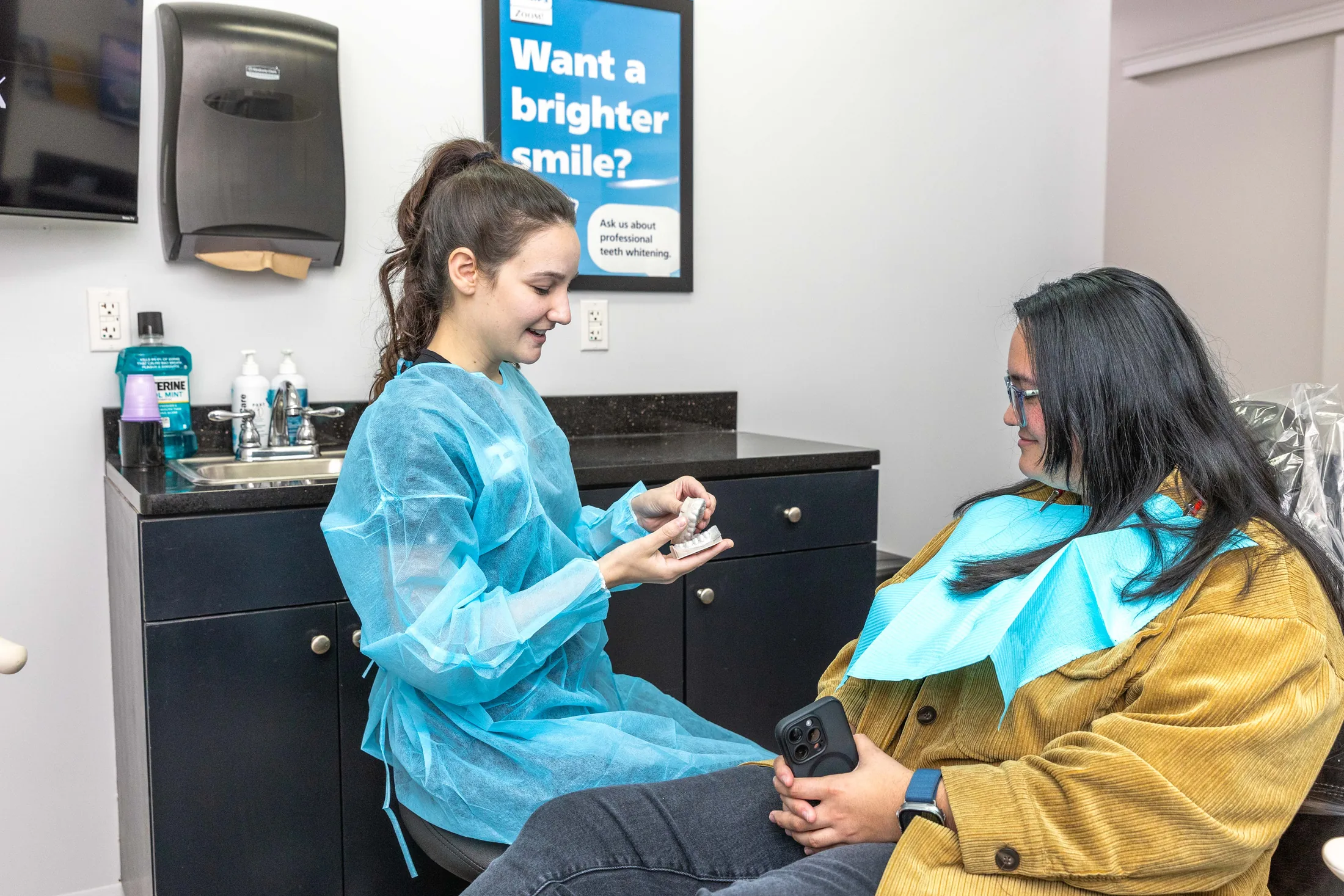
Your consultation includes an examination of your teeth, gums, and bite. The team may take photographs, X-rays, and a digital scan to create records for treatment planning. Invisalign software is then used to model how the teeth may move over time.
If you proceed, a series of custom aligners is made for your plan. You wear each set for the prescribed period before moving to the next one. Check-in visits may occur at six- to eight-week intervals, when progress is assessed and additional sets may be provided.
Treatment may take from six to 18 months, depending on the case. Actual timing depends on the movements needed and how consistently the aligners are worn. Retainers are important after treatment to help maintain the new tooth positions.
04
Real Embark Dental Cases
Embark Dental has documented Invisalign care for a patient with a deep bite completed in eight months, a patient with a crossbite, and patients with lower crowding or crowding that contributed to front-tooth chipping. These are individual cases, and results and treatment times vary.
Questions, answered
Invisalign FAQs
Am I A Candidate For Invisalign?+
An exam is required. Clear aligners can treat many spacing, crowding, and bite concerns, but tooth position, gum health, restorations, and the complexity of movement all matter.
How Often Do I Wear The Aligners?+
Wear the trays for the daily duration prescribed by your dentist, removing them as directed for eating, drinking, brushing, and flossing. Consistent wear is central to keeping treatment on schedule.
Can I Eat With Invisalign Trays In?+
Aligners are removable, allowing you to maintain your normal diet. Follow the team’s guidance about removing trays for food and beverages and cleaning your teeth before reinserting them.
How Often Will I Visit The Office?+
Visits may be scheduled six to eight weeks apart. Your dentist may choose a different interval based on your plan and progress.
Will I Need A Retainer?+
Yes, retention is an important part of keeping teeth in their new positions. The type and schedule are based on your case.
How Much Does Invisalign Cost?+
Embark Dental has advertised Invisalign for $5,499, reduced from $6,499, with one free set of retainers, a free whitening syringe, and a free iTero scan. Payment plans are listed as available. Call to confirm current availability, eligibility, and terms.
06
See What Clear Aligners Could Address
A digital evaluation can show whether Invisalign fits your teeth, bite, and goals. Request an Invisalign consultation with Embark Dental in Asheville.
07
Making Aligners Part Of Daily Life
Clear-aligner treatment depends on consistent wear and careful handling outside the office. Remove aligners for meals and for drinks other than plain water, then store them in their case rather than wrapping them in a napkin. Clean your teeth before reinserting the trays when possible. This routine helps limit trapped food and reduces the chance that an aligner will be lost or damaged.
Bring the current aligners to monitoring appointments and tell the team if a tray no longer seats fully, an attachment comes off, or you have missed wear time. Do not jump ahead without instructions. Small fit issues can affect how planned movements carry forward to later trays. Your dentist may recommend additional wear, an adjustment, or another scan depending on what the examination shows.
Retention is a separate and essential phase after active movement. Teeth can shift when aligner treatment ends, so retainers are used to help preserve the new positions. The type and wearing schedule are based on your case. Keep retainers clean, protected from heat, and stored safely when not in use, and bring them to follow-up visits if the fit changes.
08
Eating And Cleaning During Treatment
Because aligners are removable, meals do not require the food restrictions associated with fixed brackets and wires. The tradeoff is that teeth and trays need attention before the aligners go back in. Sugary or acidic liquid trapped beneath a tray can remain against enamel, while hot drinks can distort the plastic. Water is the safest drink while wearing aligners. Use a soft brush and appropriate cleaner on the trays, and avoid abrasive products that can cloud them. Regular preventive visits continue during orthodontic treatment.
Watch and learn
More about your treatment options.
A clear next step
Let’s discuss invisalign.
An examination gives your dentist the information needed to explain appropriate options, timing, and next steps.