
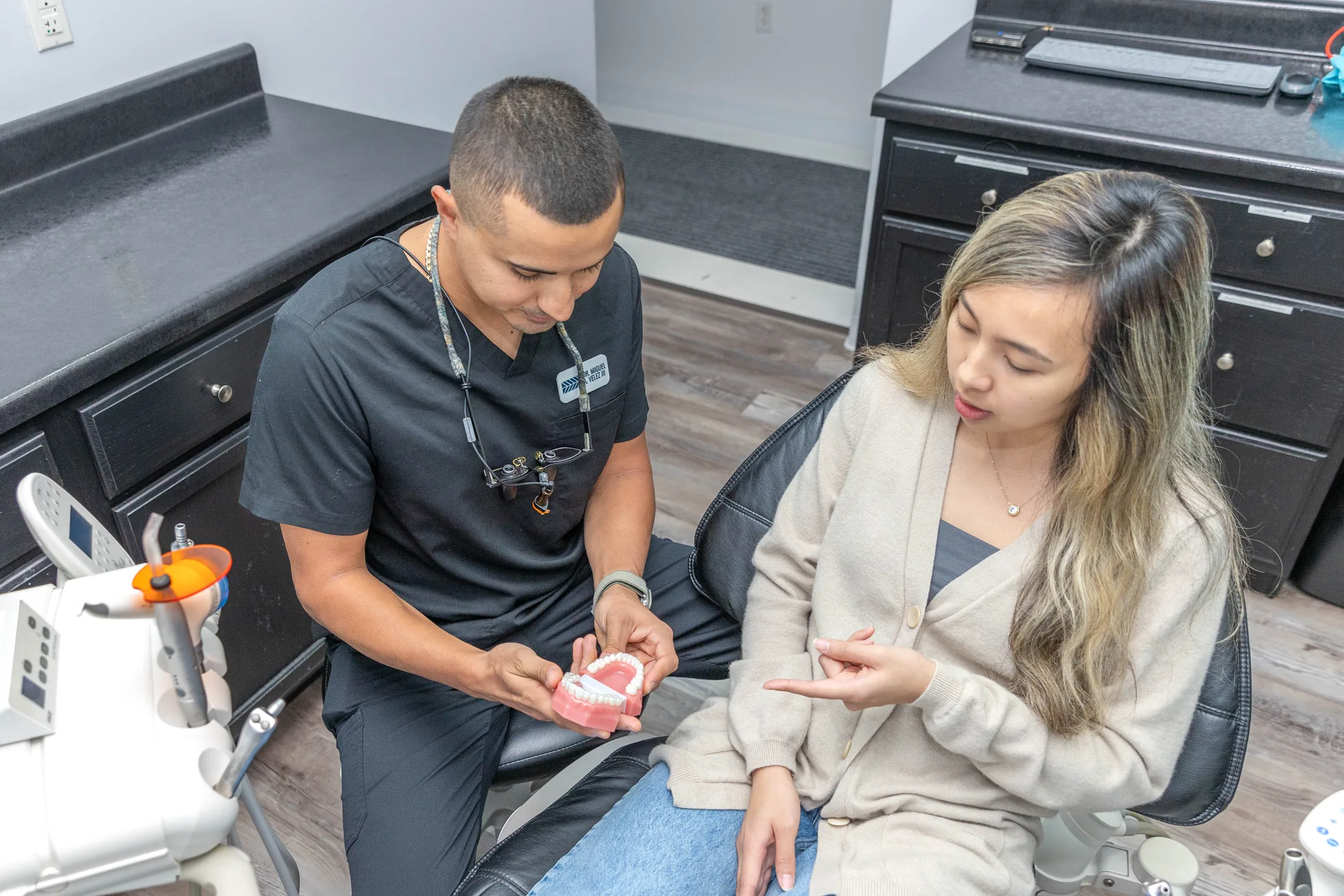
General dentistry in Asheville
Stay Ahead Of Changes In Your Teeth And Gums
Routine exams, professional cleanings, and timely treatment help you keep small concerns from becoming larger ones.
01
A Practical Plan For Long-Term Oral Health
Your mouth changes over time, even when nothing hurts. A small cavity, a cracked filling, or early gum inflammation may be easier to manage when it is found during a routine visit. General dentistry focuses on prevention, diagnosis, and treatment for conditions that affect the teeth and gums.
At Embark Dental in Asheville, your care begins with what is happening now. The team reviews symptoms, home care, health history, and previous dental work. Dr. Marc Gonzalez or another Embark Dental dentist then explains findings and helps you decide which concerns need attention first.
02
What General Dental Care May Include
Your recommendations depend on the exam. Common parts of general dentistry include:
- Comprehensive and periodic dental examinations
- Dental X-rays when clinically needed
- Professional teeth cleaning
- Tooth scaling or deeper cleaning when gum health requires it
- Evaluation of tooth sensitivity, wear, cracks, and decay
- Dental fillings and other restorative care
- Personalized brushing, flossing, and home-care guidance
These services work together. An X-ray may reveal decay between teeth, while a gum evaluation can identify inflammation or pockets that brushing alone cannot resolve. Your plan should reflect what the dentist finds rather than a one-size-fits-all checklist.
03
What To Expect At Your Visit
The team first asks about pain, sensitivity, bleeding gums, changes in your bite, or other concerns. Be sure to mention changes in your medical history and medications because they can influence oral health and treatment decisions.
Your clinical exam evaluates the teeth, existing dental work, gums, and other oral tissues. Digital X-rays may be taken based on your history and current needs. A professional cleaning removes plaque and hardened buildup from areas that are difficult to clean at home.
When the exam is complete, your dentist reviews the results with you. If something needs treatment, ask what caused it, whether it is likely to change, and what options are available. Clear priorities let you plan care around both health and budget.
04
Preventive Visits Still Depend On Home Care
Professional care supports—not replaces—what you do each day. Brush with fluoride toothpaste, clean between your teeth, and follow any instructions your dentist or hygienist gives you. If a technique feels difficult, ask for a demonstration or a different tool recommendation.
Call before your next planned visit if you notice persistent pain, swelling, a broken tooth, a loose restoration, or another sudden change. Waiting for a routine appointment may allow the problem to worsen.
Questions, answered
General Dentistry FAQs
How Often Do I Need A Dental Exam And Cleaning?+
Frequency depends on your oral health, gum condition, cavity risk, and treatment history. Your dentist will recommend an interval after evaluating your needs.
Do I Need X-Rays At Every Visit?+
No. X-rays are recommended according to symptoms, age, dental history, current risk, and how long it has been since useful images were taken.
Why Do My Gums Bleed When I Brush?+
Bleeding can be associated with gum inflammation, buildup around the teeth, or brushing technique. An examination helps determine the cause and whether professional cleaning or periodontal care is needed.
What Is The Difference Between A Regular Cleaning And A Deep Cleaning?+
A routine cleaning removes buildup around teeth in a generally healthy mouth. Scaling and root planing, often called a deep cleaning, addresses buildup and inflammation below the gumline when periodontal findings call for it.
Should I Wait Until A Tooth Hurts To Schedule?+
No. Decay and gum disease can develop without pain. Routine visits help identify changes earlier, when care may be less involved.
Can General Dentistry Help With An Old Filling Or Crown?+
Yes. Your dentist can examine worn, cracked, loose, or leaking dental work and explain whether monitoring, repair, or replacement is appropriate.
06
Schedule Your Next Dental Visit
Whether you are due for preventive care or concerned about a recent change, request a general dentistry appointment at Embark Dental in Asheville. The team will help you choose the right visit type.
07
Using Routine Visits To Prevent Larger Problems
A general dentistry visit is an opportunity to compare current findings with earlier records. Small changes in gum measurements, enamel, old restorations, bite wear, or X-rays may be more informative when viewed over time. This is why consistent records and an examination matter even when nothing hurts. Many dental conditions become painful only after they have progressed.
Prevention also happens between appointments. Fluoride toothpaste, daily cleaning between teeth, and a diet that limits frequent sugar and acidic drinks help reduce common risks. If dry mouth, dexterity, braces, implants, or bridgework makes cleaning difficult, ask for specific tools instead of relying on a generic routine. Products and techniques should fit the anatomy and restorations in your mouth.
Tell the team when your medical history changes. New prescriptions, blood thinners, diabetes, pregnancy, cancer treatment, allergies, and sleep disorders can influence oral health or dental planning. The dentist may coordinate with another healthcare professional when appropriate. A complete history helps the team recommend timing and care that account for more than a single tooth.
08
How Often To Schedule Care
The interval between dental visits should reflect current risk, not a universal calendar. A person with active gum disease, frequent decay, dry mouth, or complex restorations may need professional care more often than someone with stable findings. Your dentist and hygienist can recommend a schedule after reviewing the mouth and health history. If pain, swelling, bleeding, a broken restoration, or another change develops before the planned date, call rather than waiting. Preventive scheduling supports monitoring; it does not replace evaluation of a new problem.
A clear next step
Let’s discuss general dentistry.
An examination gives your dentist the information needed to explain appropriate options, timing, and next steps.